Almandalawi2026MD50
Back to rack

Report · Competency 03 of 09

Patient Care Provider & Health Advocate

Provides compassionate, patient-centred care and advocates for the health and well-being of individual patients and the wider community.

Status
Collected
Entries
2
Student
2026MD50 · MD Year 1
Sample 018 October 2026
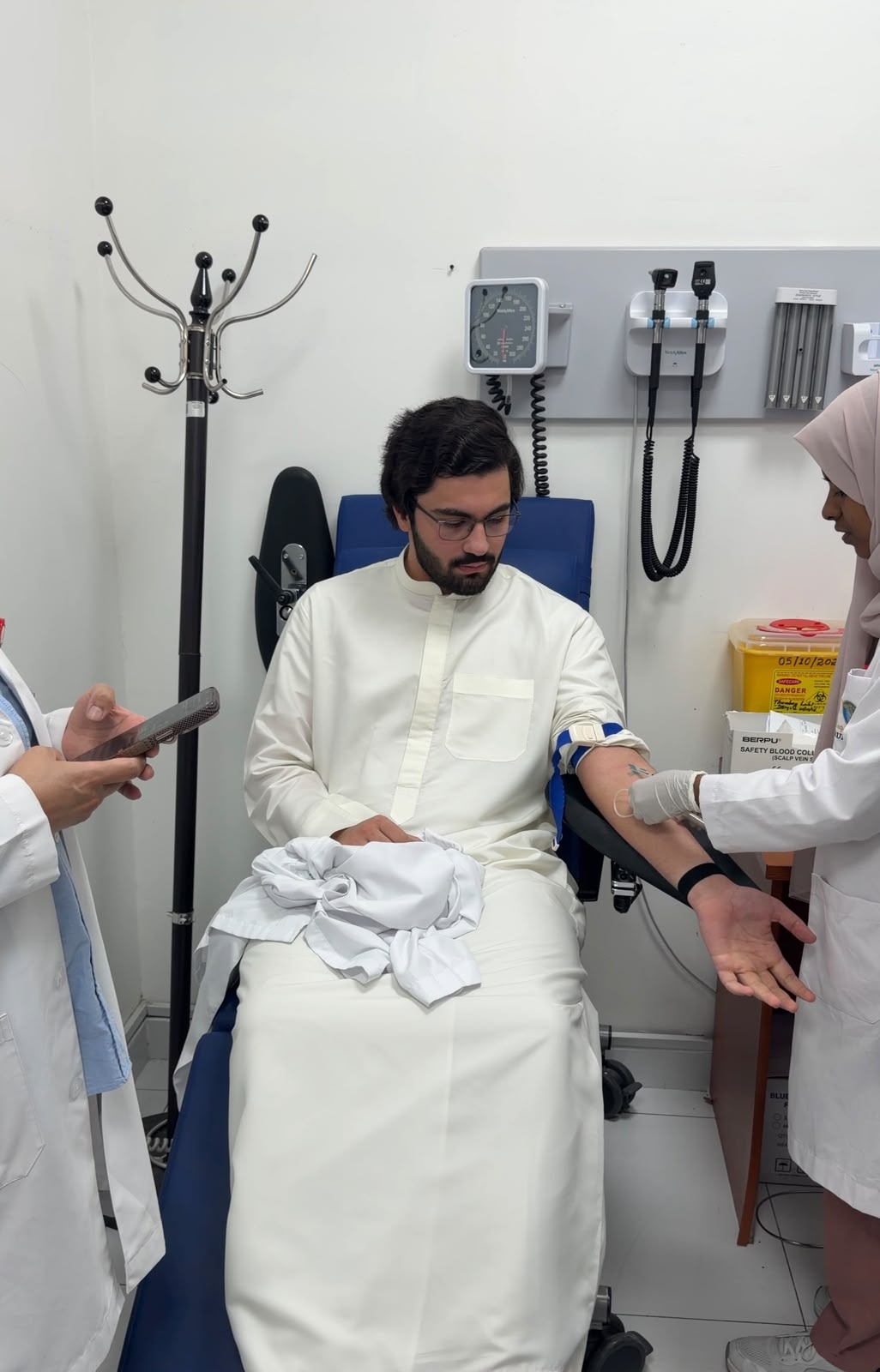
Ali seated in a clinical chair while a healthcare worker draws blood from his arm, with another clinician assisting.
Fig. A · Blood draw demonstration

Volunteer Participant, Physiology Lab Blood Draw

Collected
8 October 2026
Site
Physiology Lab, Gulf Medical University
Requested by
Organized by our lab professor, Dr. Iram

I volunteered to have my blood drawn during a physiology lab session so that my classmates could observe and practise the steps of venipuncture and sample handling under faculty supervision.

Findings · Self-reflection

  1. What happened

    When Dr. Iram asked for a volunteer, I raised my hand. I sat in the chair, had the tourniquet tightened around my arm, and watched the needle go in while the class looked on. It was the first time I had experienced a clinical procedure as the person receiving it in a learning environment, rather than as an observer.

  2. How I felt

    I was calm on the outside but noticed a small wave of anxiety right before the needle went in. What settled me most was not the technique itself but being told clearly what was about to happen at each step. That simple explanation changed how the whole procedure felt.

  3. What I learned

    Sitting in the patient’s chair taught me that a "routine" procedure is never routine for the person experiencing it. Consent, a calm voice, and explaining each step are not extras; they are part of the procedure. I also saw how important hygiene, correct labelling, and aftercare are for patient safety.

  4. What I will carry forward

    When I perform venipuncture myself, I will always introduce myself, explain the steps before I do them, check how the patient is feeling, and make sure they are comfortable before they leave. I want my patients to feel the same reassurance I felt that day.
Sample 0230 September 2026
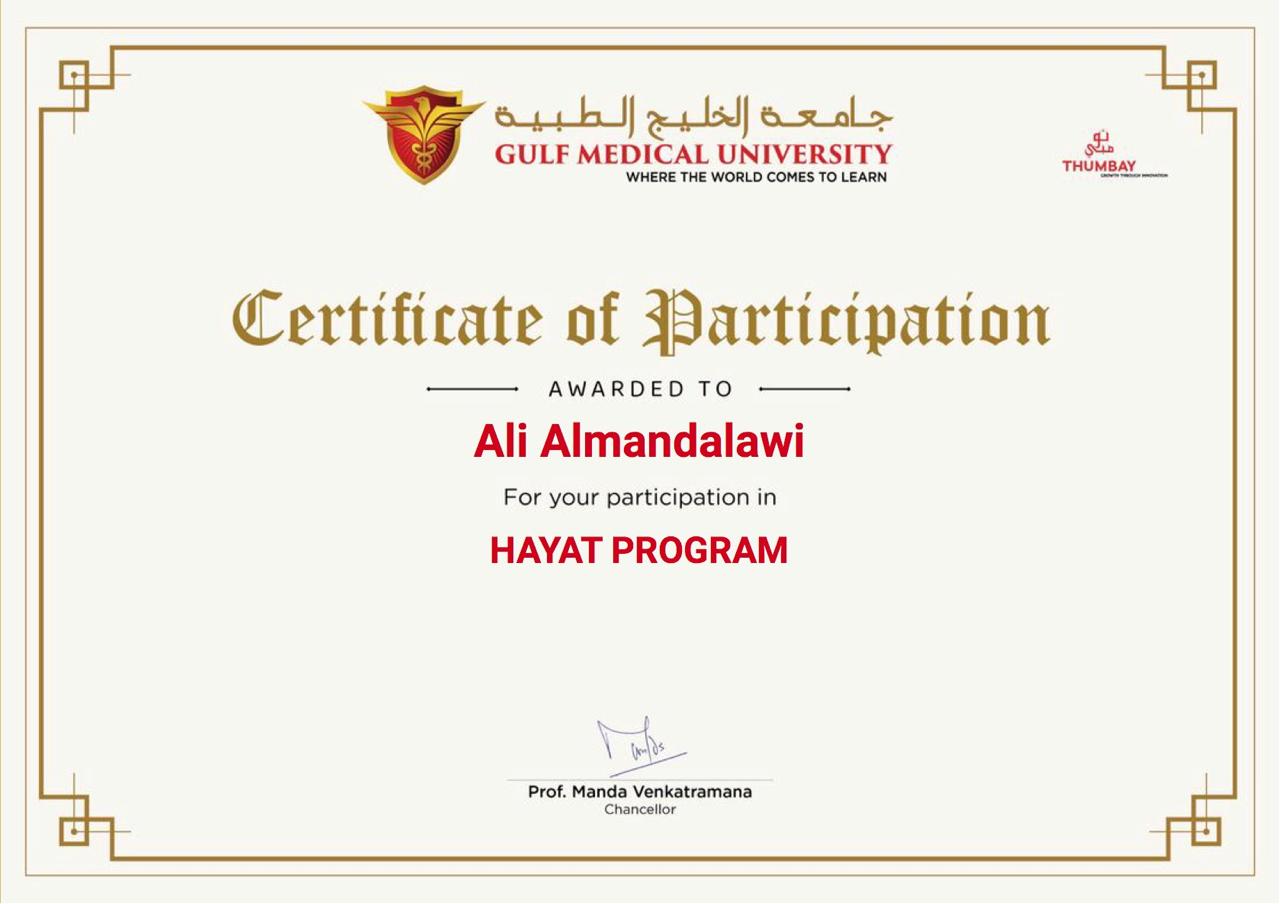
Certificate of Participation from Gulf Medical University awarded to Ali Almandalawi for the Hayat Program.
Fig. A · Blood draw demonstration

Hayat Program: Organ Donation Awareness Session

Collected
30 September 2026
Site
Gulf Medical University
Requested by
Presented by representatives of the Hayat National Program

I attended an awareness session delivered by presenters from Hayat, the UAE National Program for Organ Donation and Transplantation, covering how organ donation works, who can register, and the impact a single donor can have.

Findings · Self-reflection

  1. What happened

    The presenters explained the organ donation process in the UAE, from registering as a donor to how organs are matched and transplanted. They shared real stories of patients whose lives were saved, and addressed common myths and cultural or religious concerns families often raise.

  2. How I felt

    I was moved by how one decision can save several lives. I also realised I had never discussed organ donation with my own family, which made me think about how many people have the same gap.

  3. What I learned

    Health advocacy is not only about treating disease; it is about giving people accurate information so they can make informed choices. Doctors are trusted voices, and sensitive, culturally respectful conversations about donation can directly increase the number of lives saved.

  4. What I will carry forward

    I plan to register as a donor, talk openly with my family about it, and share what I learned with friends. As a future physician, I want to be able to discuss organ donation with patients and families confidently, compassionately, and with respect for their beliefs.

Clinical impression · Overall reflection

Together, these two experiences showed me both sides of patient care: the individual level, where trust is built one explanation at a time, and the community level, where advocacy and awareness can save lives I will never personally see. As an MD Year 1 student, I am at the very beginning of this journey, but I already understand that being a good doctor means caring for the person in front of me while also speaking up for the health of everyone around them.